
From Soil to textile
Hand-Spun, Hand-Woven Cotton from Oaxaca
Camino’s cotton fabric has been recognized in a special exhibition at the Museo Textil de Oaxaca (Oaxaca Textile Museum) as living textile art. Produced through a rare weaving tradition preserved in the mountain community of San Sebastián Río Hondo, Oaxaca, only a handful of artisan collectives on earth still produce fabric this way.
The artisan collective guided by Marcela Martínez Fabián transforms raw fiber from the Mexican Pacific coast into cloth entirely by hand. The result is a fabric impossible to reproduce through industrial production: breathable and alive with two thousand individually hand-spun, hand-woven yarns.
Each thread carries the natural variation of hand-spun cotton. No two shirts are exactly alike.
Cotton Cultivation
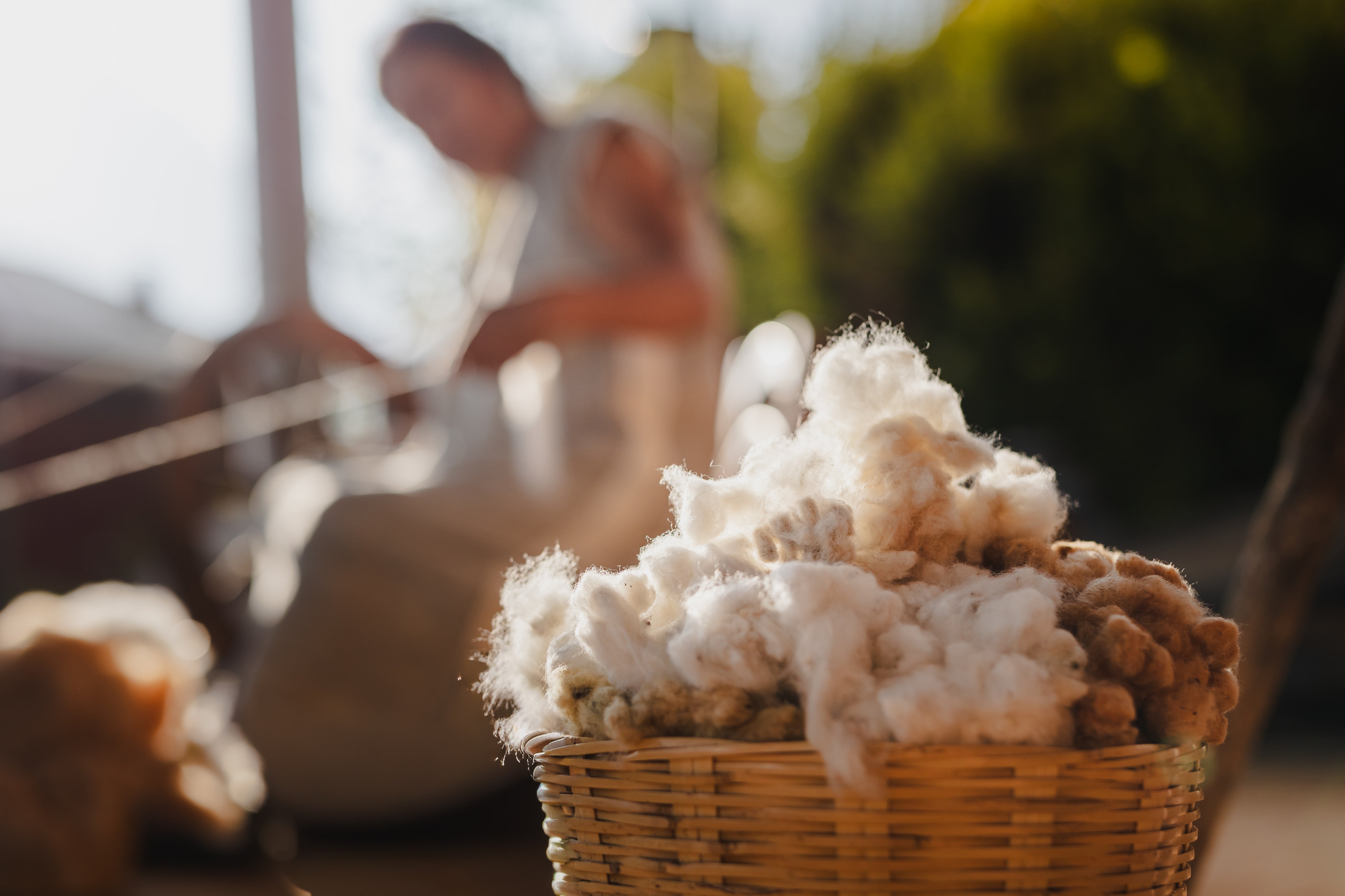
Camino cotton begins with small agricultural collectives along the southern Mexican Pacific coast, where cotton is grown organically on family farms.
Farmers cultivate native, pre-Hispanic cotton varieties on modest plots of land using rain-fed agriculture and manual harvesting methods. Without pesticides or industrial farming techniques, the visual identity of each harvest is shaped by soil, rainfall, and climate.
Hand-Ginning the Fiber
Once harvested, the cotton arrives in the mountain community of San Sebastián Río Hondo. Artisans remove the seeds using traditional roller gins, hand-operated machines that gently separate seed from fiber without damaging the cotton.
Unlike industrial ginning methods, this slower process preserves the full length of the fibers. Longer fibers spin into yarn that is both softer and stronger, producing fabric that is more durable while maintaining the light, airy hand that gives the finished shirt its exceptional comfort.
Spinning the Yarn
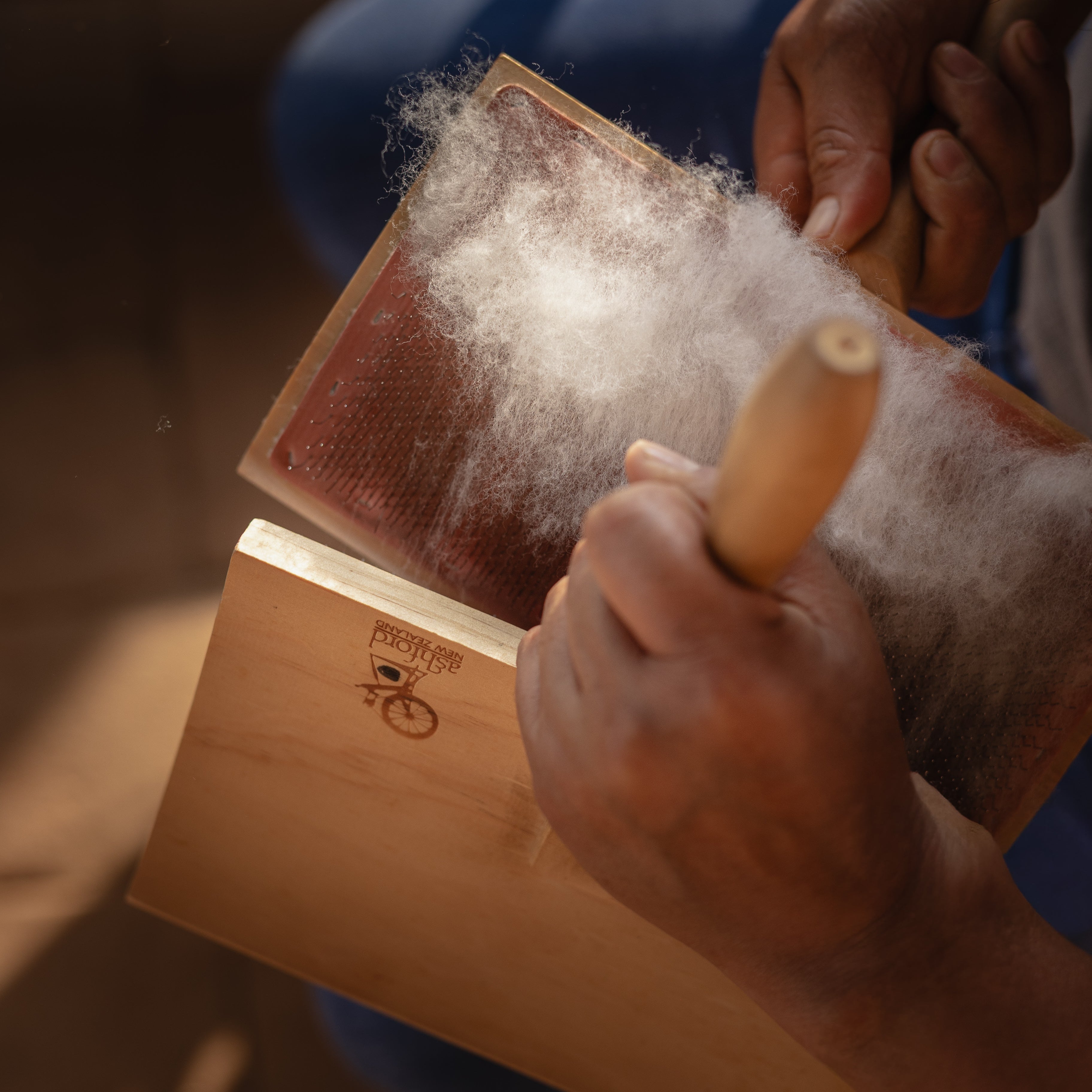
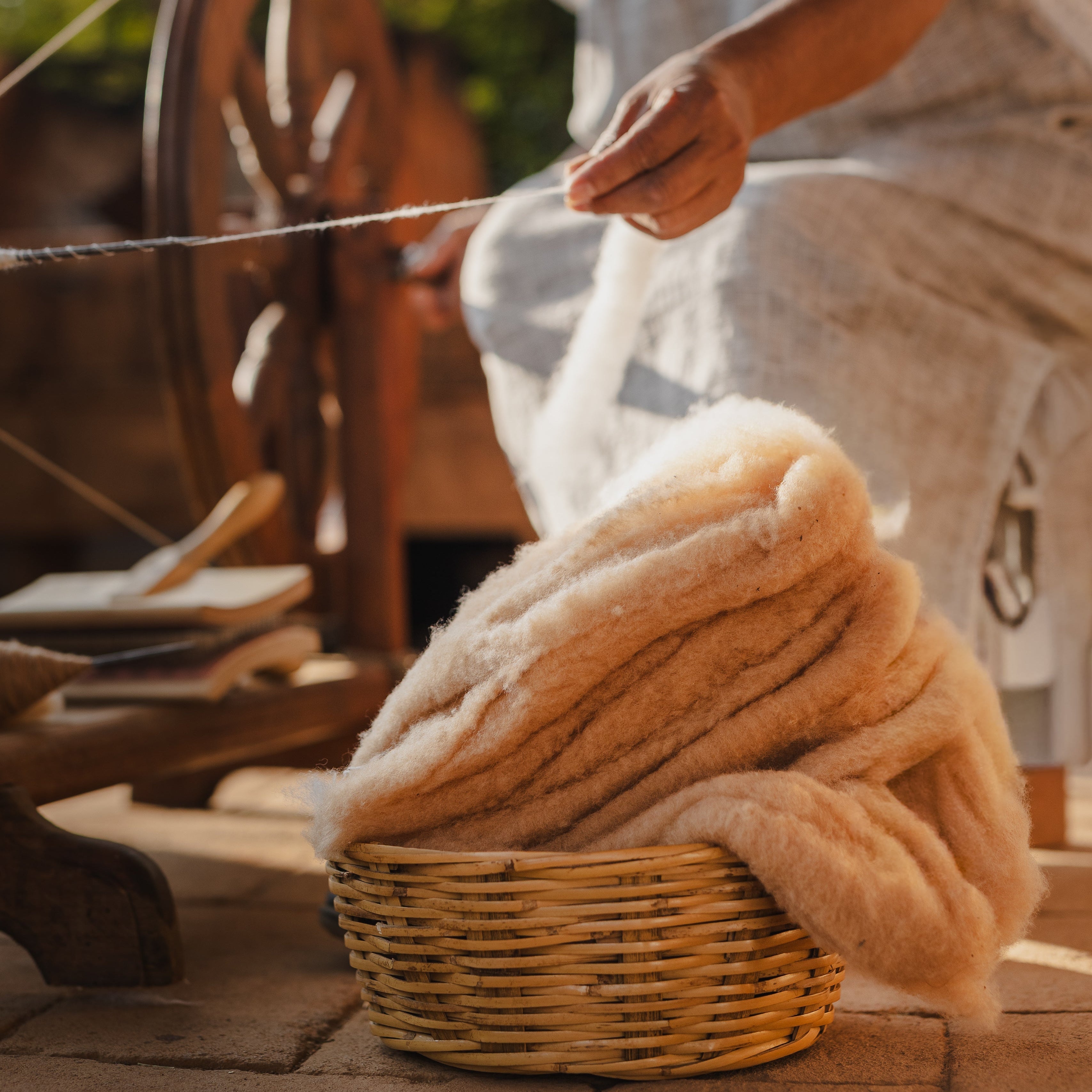
The prepared cotton is spun into yarn using traditional spinning wheels by women in the Río Hondo community.
Because the thread is drawn and twisted by hand rather than extruded through industrial machinery, the yarn develops subtle variations in thickness along its length. These natural irregularities prevent the fibers from packing tightly together in the finished cloth, allowing air to circulate more freely through the fabric while creating the distinctive texture unique to hand-spun textiles.
Pedal Loom Weaving
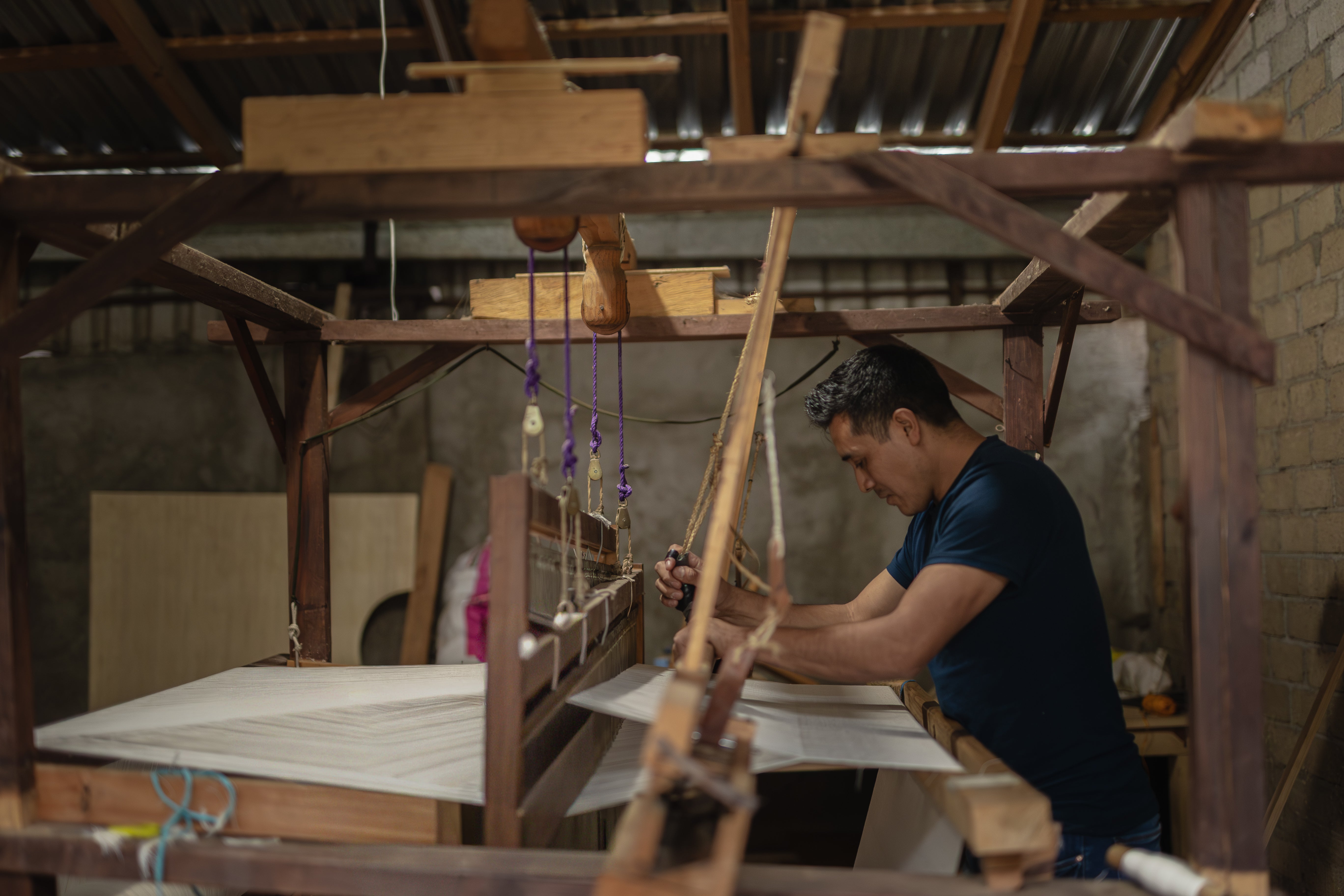
Approximately 2,000 individual threads are tied by hand to a foot-powered pedal loom, where artisans control tension and rhythm manually as they weave.
This slower weaving method produces a looser structure than modern industrial looms, allowing heat and moisture to escape easily through the fabric. The result is a textile exceptionally well suited to warm climates — light, breathable, and comfortable even in high heat and humidity.
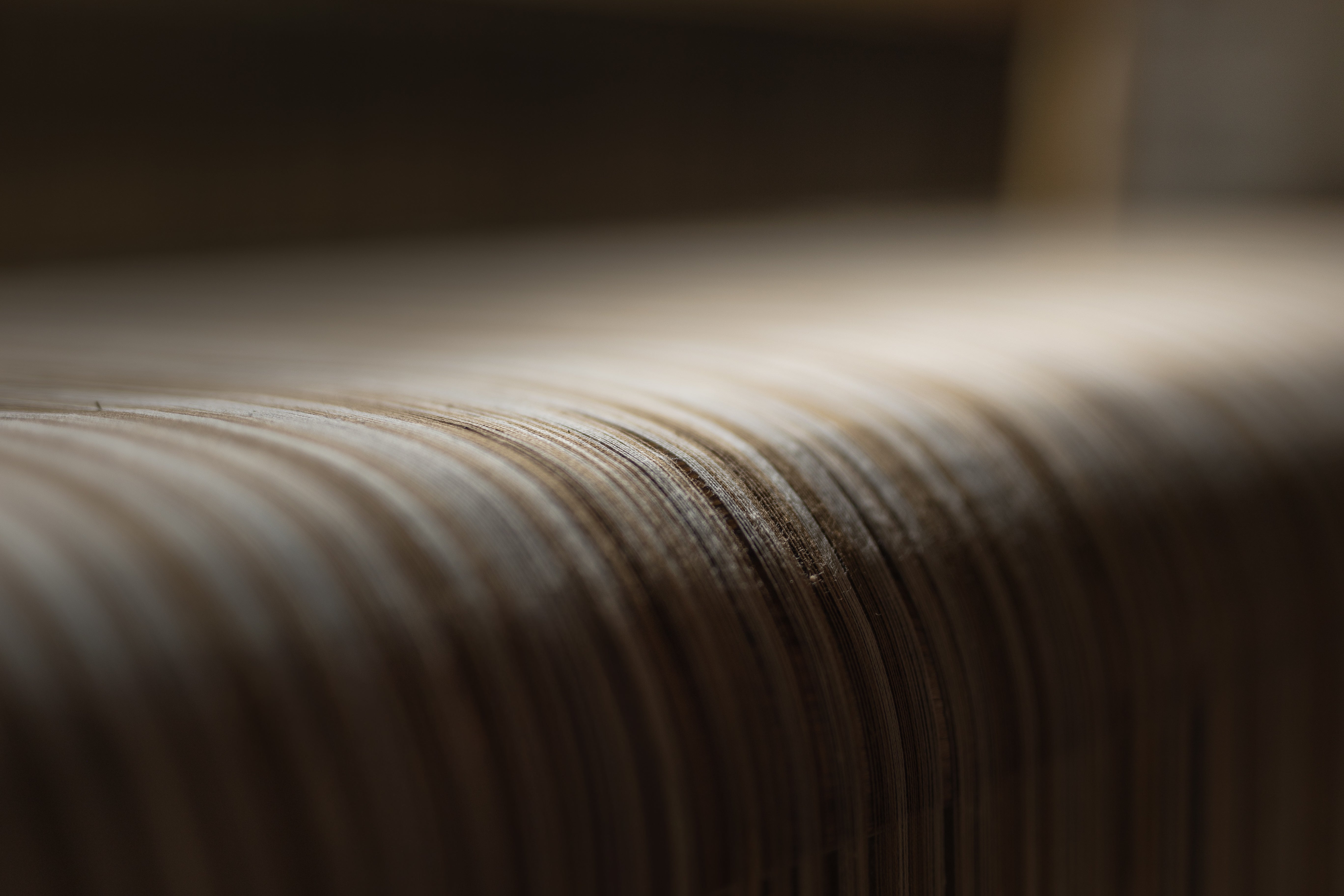
The subtle irregularities of hand-spun yarn create a surface that shifts gently in the light, giving the fabric a visual richness rarely found in modern textiles.